Where Tables Meet Reels: Hybrid Innovations Driving Casino Evolution Through Bonuses and Payments
Vera Schmitz · Jul 23, 2026
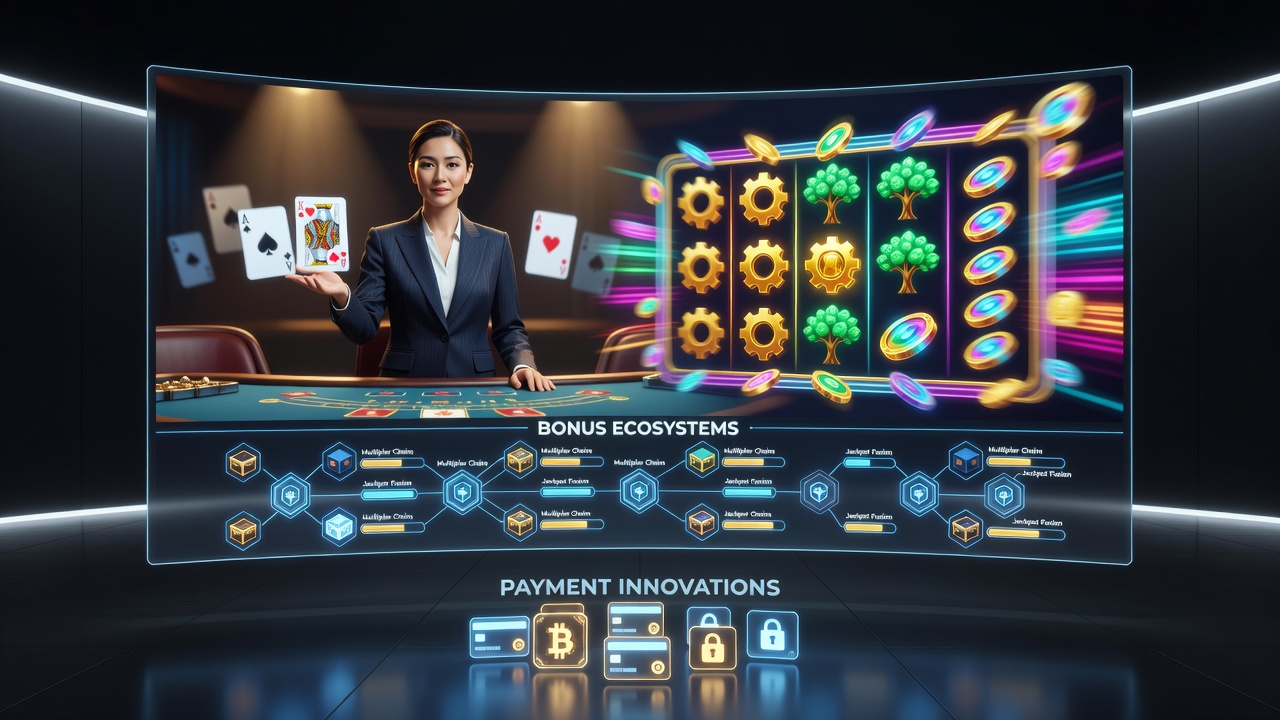
Where Tables Meet Reels: Hybrid Innovations Driving Casino Evolution Through Bonuses and Payments
Hybrid gaming models continue to expand as operators combine live dealer tables with reel mechanics through interconnected bonus ecosystems and faster payment systems, and data from mid-2026 shows steady adoption across multiple jurisdictions. Platforms now route player activity between real-time table sessions and automated reel sequences while shared progress bars track bonuses that unlock features in either format, and this integration relies on unified player accounts that carry balances, multipliers, and loyalty tiers across both environments.
Mechanics of the Merge
Developers link live dealer outcomes to reel modifiers by embedding triggers such as card draws that award extra spins or table wins that activate wild symbols on connected slot interfaces, while the reverse path allows reel combinations to influence dealer-side multipliers or side bets. These connections appear in titles where a roulette spin determines reel positions or a blackjack hand unlocks a progressive jackpot meter visible on the slot side, and operators maintain separate RNG certification for reels alongside regulatory approval for live streams to keep both components compliant.
Bonus Ecosystems in Practice
Shared bonus structures accumulate value from table wagers and reel spins into common pools that players redeem as free rounds, cashback, or enhanced table limits, and this pooling reduces fragmentation across game types. Systems track contribution rates differently for each vertical yet convert them into unified loyalty points, so a sequence of live baccarat hands followed by slot play advances the same VIP level without separate tracking, and operators report that such ecosystems increase session length because players move fluidly between formats to complete ongoing challenges.
Payment Innovations Supporting Hybrids
Instant settlement rails now handle cross-format transactions so that winnings from a live table can fund immediate reel spins without withdrawal steps, and incoming deposits trigger bonus credits that apply to whichever vertical the player selects next. Digital wallet integrations and account-to-account transfers reduce processing times to seconds, while some platforms embed crypto options that settle table and reel activity under the same transaction ledger. These payment layers also support responsible gambling tools that apply uniform deposit limits across both game types, and regulators in several regions require operators to display unified spending summaries regardless of format.

Regional Developments as of July 2026
European markets continue to pilot hybrid titles under updated technical standards issued by the Malta Gaming Authority, and those standards require clear separation of live and RNG elements within the same lobby while mandating transparent bonus conversion rules. In North America, operators licensed by the Nevada Gaming Control Board have introduced hybrid offerings that link state-approved live tables with certified reel games, and early figures reveal higher average revenue per user when players engage both components. Australian regulators have examined similar products under interactive gambling frameworks, focusing on payment transparency and bonus fairness, while Canadian provincial bodies assess cross-format play through existing iGaming frameworks.
Industry Data and Examples
Reports compiled by the American Gaming Association indicate that hybrid game categories grew in licensed markets during the first half of 2026, driven partly by payment speed improvements and partly by bonus structures that reward movement between live and automated play. One documented case involved a European operator linking live blackjack tables to a Megaways-style reel game where table wins directly funded additional reel spins, and player retention metrics rose compared with standalone versions of each product. Observers note that such pairings succeed when the bonus ecosystem feels consistent rather than forced, and when payment flows remain uninterrupted across formats.
Technical and Regulatory Considerations
Hybrid platforms must maintain separate audit trails for live stream integrity and RNG outcomes while presenting unified player interfaces, and this dual requirement has prompted investment in middleware that synchronizes session data without merging the underlying random processes. Payment providers undergo additional scrutiny to confirm that funds move securely between live and reel ledgers, and operators often publish payout percentages for each vertical separately even when bonuses combine contributions. As July 2026 data continues to accumulate, licensing bodies in multiple regions review whether existing consumer protection measures cover these blended experiences adequately.
Conclusion
Hybrid gaming continues to develop through tighter integration of live dealer tables with reel mechanics, supported by evolving bonus ecosystems and payment innovations that reduce friction between formats. Regulatory updates in Europe, North America, and other regions shape how these products reach players, while industry reports track adoption patterns and revenue effects. The model remains dependent on technical reliability, clear bonus rules, and compliant payment flows, and further expansion will depend on sustained alignment among operators, developers, adn oversight bodies.