Reward Structures and Banking Pathways in Hybrid Reel and Table Gaming Environments
Uma Fischer · Jul 26, 2026

Reward Structures and Banking Pathways in Hybrid Reel and Table Gaming Environments
Hybrid platforms that combine reel-based games with live dealer tables have developed layered reward systems that directly influence how players handle deposits and withdrawals, and these systems continue to evolve through 2026 as operators refine their offerings. Data from multiple jurisdictions shows that higher reward tiers often unlock expedited processing times, increased transaction limits, and specialized payment methods that remain unavailable to entry-level participants.
Defining Reward Tiers Across Hybrid Sites
Operators structure reward tiers around cumulative activity that spans both reel spins and table game wagers, creating a unified progression path rather than separate tracks for each game type. Participants advance through levels by meeting combined wagering thresholds, after which platforms grant access to tier-specific benefits that include tailored transaction features. Research indicates that these structures encourage sustained engagement across game categories because players must maintain activity in both reels and tables to preserve status.
Transaction Options Available at Each Level
Entry-level tiers typically restrict users to standard credit card deposits and e-wallet withdrawals with baseline processing windows of two to five business days. Mid-tier accounts gain options such as instant bank transfers and cryptocurrency channels alongside reduced minimum deposit amounts and elevated daily caps. Top-tier members receive dedicated account managers who facilitate wire transfers exceeding standard limits, priority cryptocurrency conversions, and same-day settlement for most methods. Observers note that these graduated access patterns appear consistently across platforms that blend slots with live blackjack, roulette, and baccarat.
Intersection Points Between Tiers and Payments
The connection between reward level and transaction capability becomes clearest when examining withdrawal speed and fee structures. Higher tiers frequently eliminate processing fees on certain methods while compressing verification times from days to hours. Players at advanced levels also encounter higher maximum withdrawal amounts per transaction, which aligns with the larger bankrolls accumulated through combined reel and table play. In July 2026, several platforms updated their tier requirements to incorporate real-time transaction history as an additional advancement metric, further tightening the link between payment behavior and reward status.
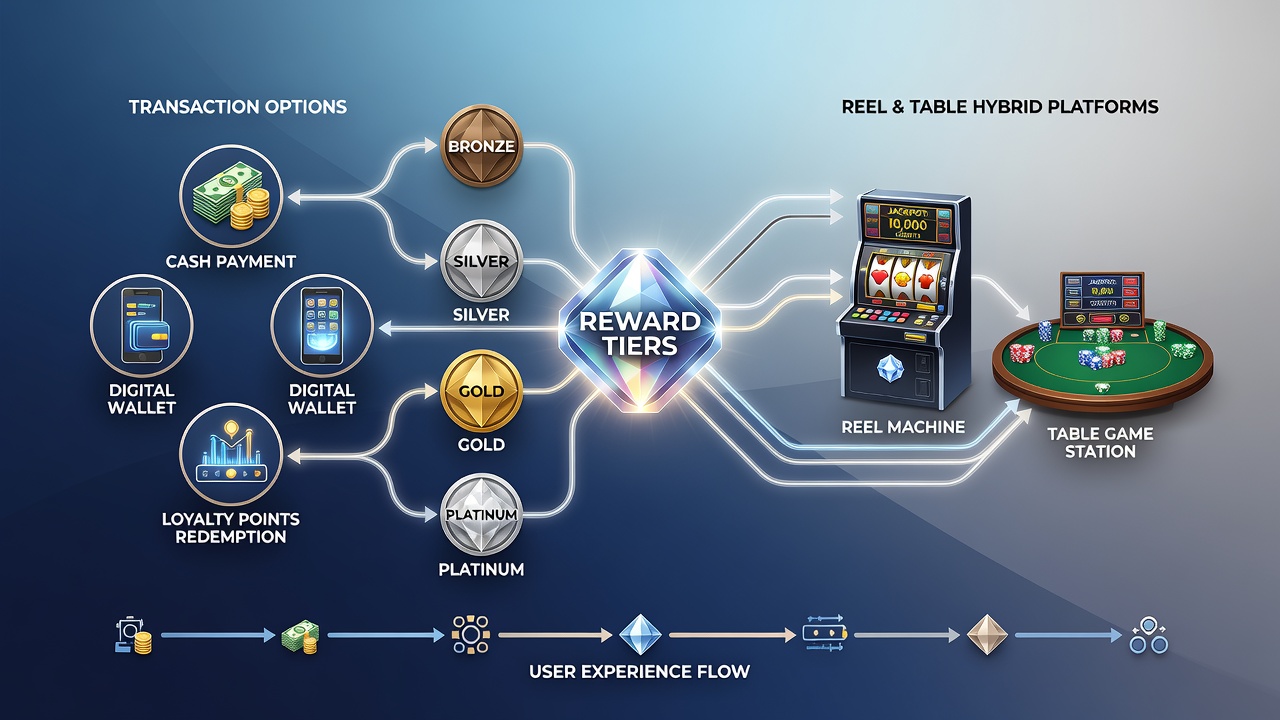
Those who study these systems have observed that hybrid platforms use transaction data to calibrate bonus eligibility within each tier. For instance, a mid-tier player completing a high-volume deposit via a preferred method may unlock an accelerated path to the next level, while repeated use of slower options can delay progression. This feedback loop reinforces the practical value of selecting payment routes that align with long-term tier goals.
Regional Regulatory Influences on Tiered Transactions
Regulatory frameworks in different markets shape how operators implement these intersections. The Nevada Gaming Control Board requires clear disclosure of tier-based payment terms, ensuring players understand limits and timelines before advancing. Meanwhile, reports from the Alcohol and Gaming Commission of Ontario highlight that Canadian platforms must maintain uniform minimum standards across all tiers, preventing excessive differentiation that could disadvantage newer participants. These rules create a baseline consistency even as operators experiment with loyalty-linked banking features.
Practical Patterns Observed in 2026
Industry analyses reveal that hybrid platforms have increased the proportion of tier-exclusive payment methods over the past year. Top-tier users now access specialized stablecoin options and direct bank rails with settlement guarantees unavailable at lower levels. Data shows that players who strategically combine reel and table activity tend to reach higher tiers faster, thereby gaining earlier access to these enhanced transaction tools. Such patterns suggest that reward structures function as both engagement mechanisms and gateways to improved banking efficiency.
Conclusion
The interplay between reward tiers and transaction options on reel and table hybrid platforms reflects a deliberate design choice by operators to link gameplay diversity with financial flexibility. As platforms continue to refine these systems through 2026, the relationship between tier status and available payment features remains a central element of how participants manage their activity across both game categories.