Payment Gateway Breakthroughs Elevating VIP Status in Live Hybrid Slot Formats
Noah Bauer · Jun 18, 2026

Payment Gateway Breakthroughs Elevating VIP Status in Live Hybrid Slot Formats
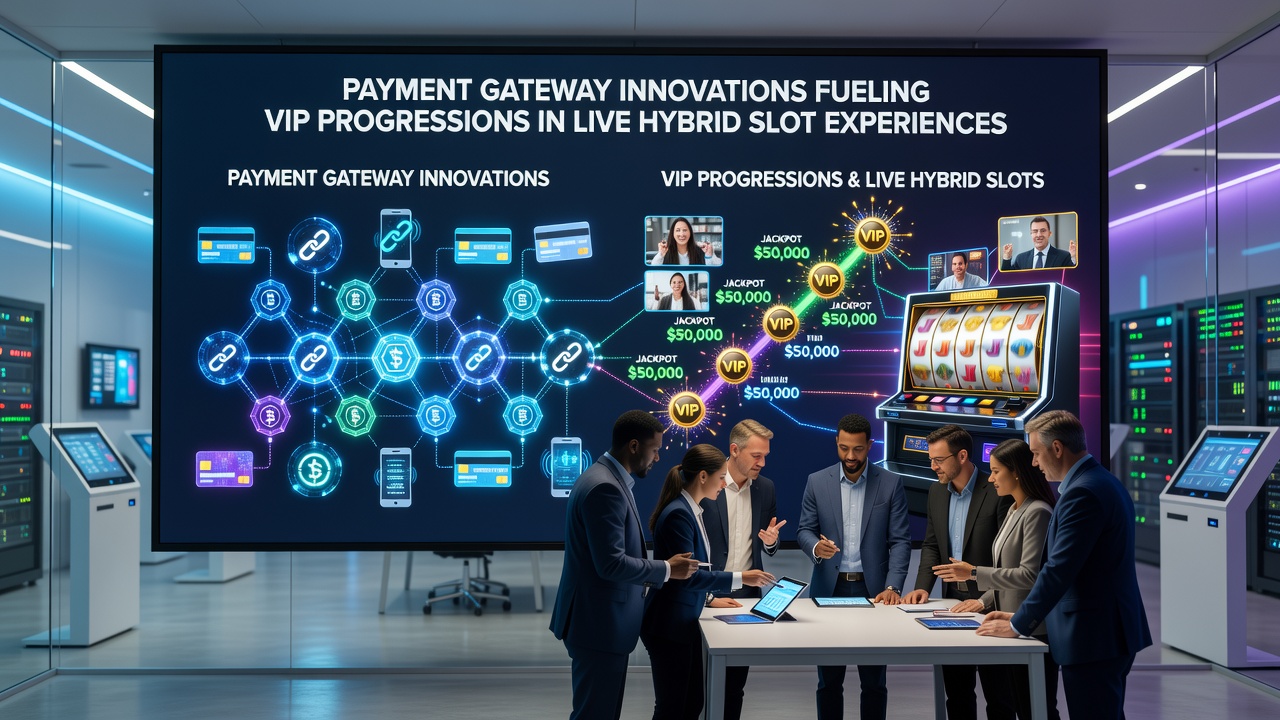
Payment gateway innovations have transformed how operators manage player accounts in live hybrid slot environments where real-time dealer interactions merge with digital reel mechanics, and data from June 2026 shows increased adoption of instant settlement systems that sync directly with loyalty tracking platforms. These technologies allow seamless fund movements while automatically logging transaction volumes that feed into VIP tier calculations, and researchers at institutions like the University of Nevada Las Vegas have documented how such integrations reduce processing delays from minutes to seconds.
Operators now deploy API-driven gateways that connect multiple banking rails including traditional cards, digital wallets, and emerging cryptocurrencies into single dashboards, whereas older systems required separate logins that fragmented player data. This consolidation means every deposit or withdrawal updates a central profile in real time, and figures from industry reports indicate transaction success rates climbing above 98 percent across major platforms during the first half of 2026.
Real-Time Settlement Systems and Tier Advancement
Modern gateways process authorizations in under three seconds through optimized routing algorithms that prioritize low-latency paths, and this speed directly influences how quickly players accumulate the activity metrics required for VIP progression. Live hybrid formats benefit especially because sessions often span both video streams and slot spins, creating mixed transaction patterns that legacy processors struggled to categorize accurately. Experts note that when settlement occurs instantly the system can apply bonus multipliers or loyalty points before the next spin begins, keeping engagement continuous.
One documented case involved a European operator that switched to a gateway supporting unified ledgers, after which average time to reach mid-tier VIP status dropped by 22 percent according to internal metrics shared at industry conferences. The change eliminated batch processing windows that previously delayed point crediting until the following day, and similar upgrades have appeared in North American markets where state regulators require transparent audit trails for all fund movements.
Security Protocols Supporting Continuous Play
Tokenization and biometric authentication layers now embed within payment flows so players remain verified without repeated identity checks, and this continuity matters in hybrid environments where players switch between live tables and automated reels within teh same account session. Advanced encryption standards adopted in 2025 and refined through June 2026 have reduced fraud attempts by routing suspicious patterns through secondary verification without halting legitimate activity. Data from the American Gaming Association highlights how these layered checks maintain compliance while preserving the fluid experience players expect from hybrid formats.
Multi-factor systems also feed into risk-scoring engines that adjust limits dynamically based on player history, allowing high-volume VIP candidates to transact larger amounts without manual reviews. Observers at gaming technology summits have pointed out that such adaptive controls prevent account lockouts that once interrupted momentum toward higher tiers, and the result appears in longer average session durations across tracked platforms.
Loyalty Integration Through Unified Data Streams
Gateways built with open APIs now push transaction metadata directly into customer relationship management databases, enabling automated VIP qualification based on deposit frequency, average stake size, and withdrawal patterns. In hybrid slot settings this linkage captures both live dealer tips and reel wagers under one identifier, creating comprehensive profiles that trigger personalized rewards without manual intervention. Reports from the European Gaming and Betting Association indicate that operators using these connected systems saw a 31 percent rise in VIP retention rates during early 2026 compared with those relying on periodic data imports.
Players advancing through tiers receive instant notifications when new benefits unlock, and the same gateway layer can trigger promotional credits that appear in the account balance before the next game round. This immediacy keeps the progression loop visible and encourages continued participation, whereas delayed recognition previously led to disengagement in some segments. Research papers presented at academic gaming forums have examined how these feedback mechanisms influence long-term behavior patterns across different regulatory jurisdictions.
Regional Regulatory Variations and Technology Adoption
Jurisdictions outside the United Kingdom have implemented distinct frameworks that still accommodate rapid payment innovations, and Australian authorities through the Australian Communications and Media Authority have issued guidance encouraging real-time monitoring tools that align with gateway capabilities. Canadian provinces continue testing pilot programs that pair licensed gateways with hybrid game certifications, focusing on audit logs that record every fund movement alongside game outcomes. These varied approaches demonstrate that technical standards can evolve alongside player experience improvements without creating uniform global rules.
Operators adapting gateways to meet these regional requirements often deploy modular compliance modules that activate based on player location, ensuring VIP tracking remains accurate regardless of cross-border play. Such flexibility has become essential as live hybrid products expand into new markets where regulators emphasize consumer protection through transparent transaction histories.
Conclusion
Payment gateway advancements continue to reshape how VIP progressions unfold within live hybrid slot experiences by linking financial activity directly to engagement metrics and reward systems. Data collected through June 2026 underscores measurable reductions in processing times and corresponding increases in tier advancement speed, while security enhancements maintain regulatory compliance across multiple regions. As API integrations deepen and settlement speeds improve further, operators gain clearer visibility into player behavior that supports both retention strategies and operational efficiency. The ongoing evolution of these systems reflects broader shifts toward unified platforms capable of handling the complex demands of hybrid gaming formats without compromising speed or oversight.